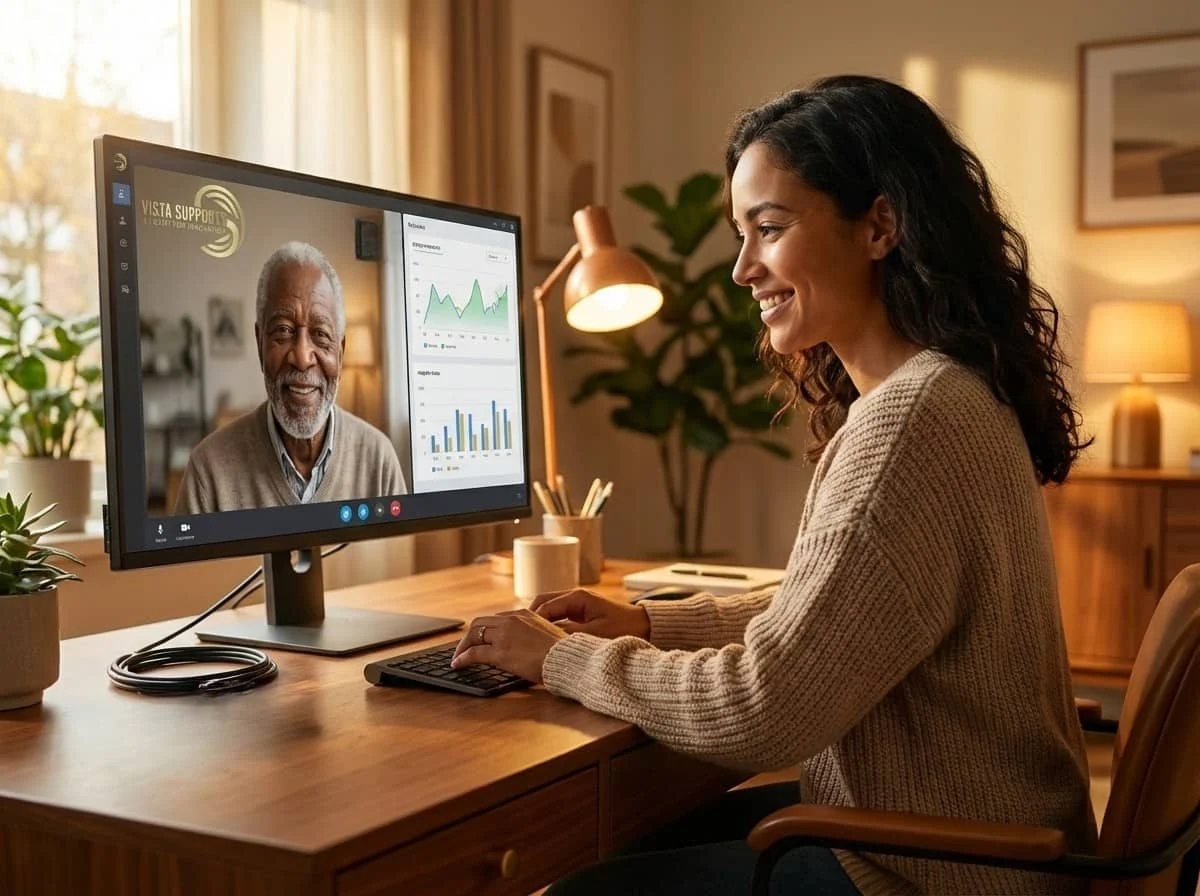
The intellectual and developmental disabilities service sector stands at a crossroads. With vacancy rates exceeding 40% at many provider agencies and turnover costs draining operational budgets, the traditional staffing model has become financially unsustainable. Remote supports IDD technology offers more than a band-aid solution. It represents a fundamental reimagining of how agencies deliver quality care while remaining operationally viable.
But here is the truth most consultants will not tell you: most agencies are implementing remote supports wrong.
They are starting with the technology instead of starting with the person. They are buying cameras and sensors and calling it innovation. They are treating remote supports like surveillance with a budget instead of like person-centered planning that finally has the tools it needs to scale.
This guide provides the strategic framework provider agencies need to implement remote supports IDD systems that actually work. Systems that satisfy state regulators, exceed quality metrics, and create sustainable operational models for the decades ahead.
Understanding Remote Supports IDD: Beyond Cameras and Sensors
Let’s start with what remote supports IDD is NOT.
It is not 10 iPhones duct-taped together with each person’s camera feed. Yes, people have tried this. No, it doesn’t scale. Yes, it falls apart the first time someone needs a bathroom break.
It is not generic security cameras pointed at people 24/7 with someone half-watching a monitor bank like a bored night security guard.
It is not replacing human connection with machines and hoping nobody notices the difference.
Remote supports IDD, done right, is person-centered planning elevated into the digital age.
At its core, this approach leverages enabling technology to extend the reach of direct support professionals. One trained staff member can provide meaningful oversight to multiple individuals across different locations. The technology stack typically includes environmental sensors, video monitoring capabilities, two-way communication systems, and sophisticated alert algorithms that distinguish between routine activities and situations requiring intervention.
But the technology is only half the equation. The other half, the part that determines whether your implementation succeeds or becomes an expensive failure collecting dust, is the interpretive intelligence that makes sense of what the technology is telling you.
Anyone can set up sensors. The question is: what do you DO with the data those sensors generate?
The Staffing Crisis Math Nobody Wants to Say Out Loud
Provider agencies compete for the same limited pool of workers as retail giants, fast food chains, and warehouse operations, all of which often offer higher wages and less demanding work conditions. Remote supports IDD technology fundamentally changes this equation by reducing the total number of staff hours required to maintain safe, supportive environments.
Consider the overnight problem. Agencies operating residential homes traditionally require overnight staffing at every location. In many of those homes, the overnight staff member sits awake for eight hours in case something happens. Some nights, nothing happens. Some nights, everything happens. But the staffing cost is the same regardless.
Remote supports IDD implementation can significantly reduce overnight staffing needs in appropriate settings, freeing resources that can be redirected toward higher day-shift wages, enhanced training programs, and staff retention initiatives. The exact reduction depends on the individuals served, their support needs, and regulatory requirements in your state. But even conservative implementations change the financial equation meaningfully.
The staffing benefits extend beyond simple mathematics. Remote supports IDD positions are often more attractive to workers who want to contribute to disability services but cannot commit to traditional overnight shifts. Parents with young children, students pursuing degrees, and experienced professionals seeking reduced physical demands all find remote monitoring roles accessible. This expanded labor pool helps agencies fill positions that might otherwise remain vacant for months.
And new role categories open up. Remote monitoring positions can accommodate workers who cannot perform the physical demands of traditional DSP roles, including individuals with disabilities themselves, older workers, and people seeking flexible schedules. These workers bring valuable skills to disability services while filling positions that traditional recruitment cannot.
Vista Link: The Interpretive Layer That Makes Remote Supports IDD Actually Work
Here’s where most remote supports implementations fail. They install the technology. They train someone to watch the screens. And then they wonder why outcomes aren’t improving, why staff are frustrated, and why regulators are asking hard questions.
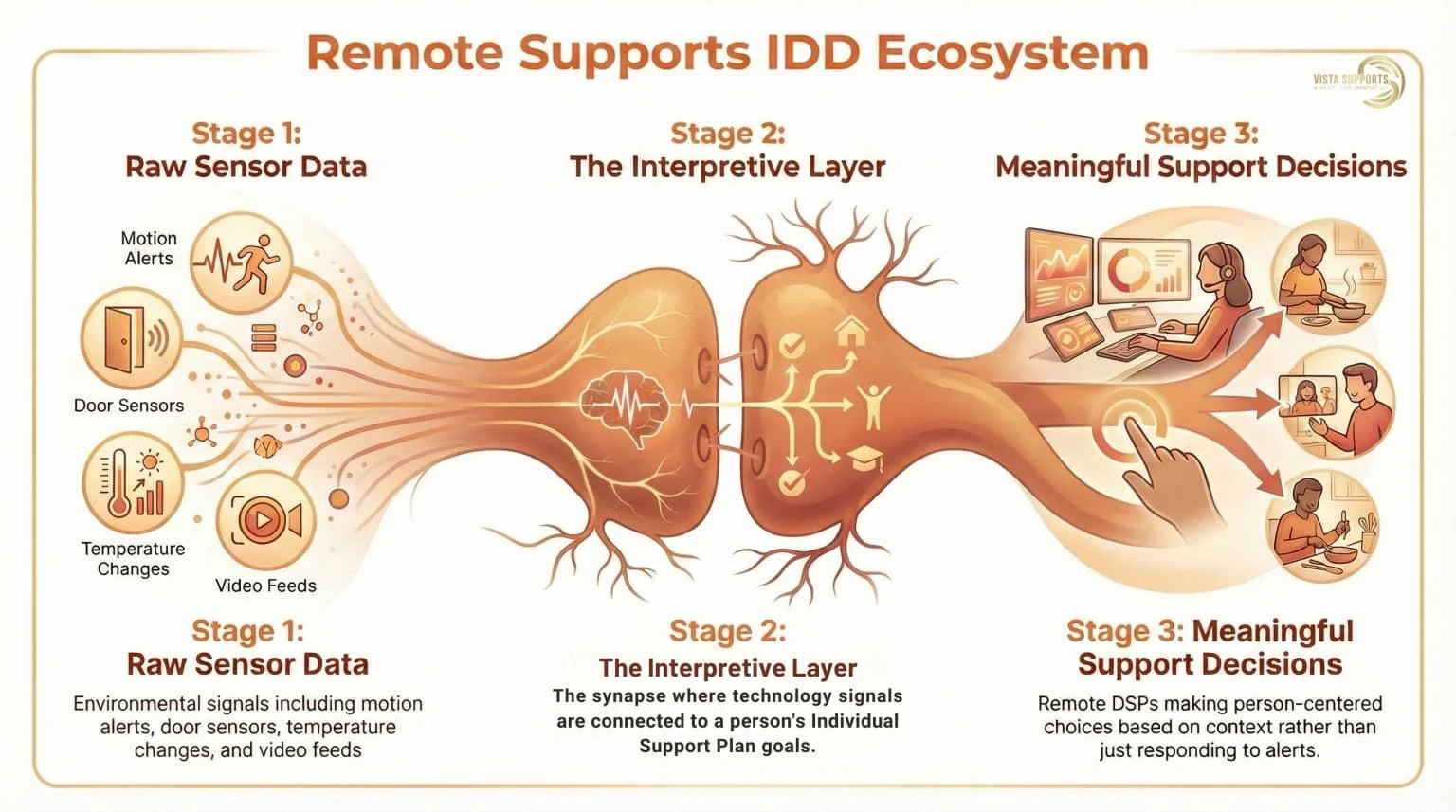
The missing piece is the interpretive intelligence between the raw technology data and meaningful support decisions. That’s what Vista Link provides.
Vista Link isn’t a camera system. It isn’t a sensor package. It is the framework that connects what the technology detects to what the person’s Individual Support Plan says they need. It stands in the synapse between technology signals and human intelligence, giving remote direct support professionals the context they need to provide meaningful, person-centered support rather than just watching screens.
It Starts With the Person’s Goals, Not the Technology’s Capabilities
Every Vista Link implementation begins with the ISP. Not with the equipment catalog. Not with the sales brochure. With the person.
Does this person have goals around independence in meal preparation? Then the technology configuration focuses on kitchen safety, not on monitoring every movement throughout the entire home.
Does this person have a history of medical emergencies that require rapid response? Then the health monitoring components take priority.
Does this person value privacy in their bedroom and bathroom? Then those spaces remain private except for safety-critical alerts.
Vista Link interprets the ISP so the technology serves the person’s goals instead of overriding them.
It Creates a Framework for Remote DSPs to Provide Meaningful Support
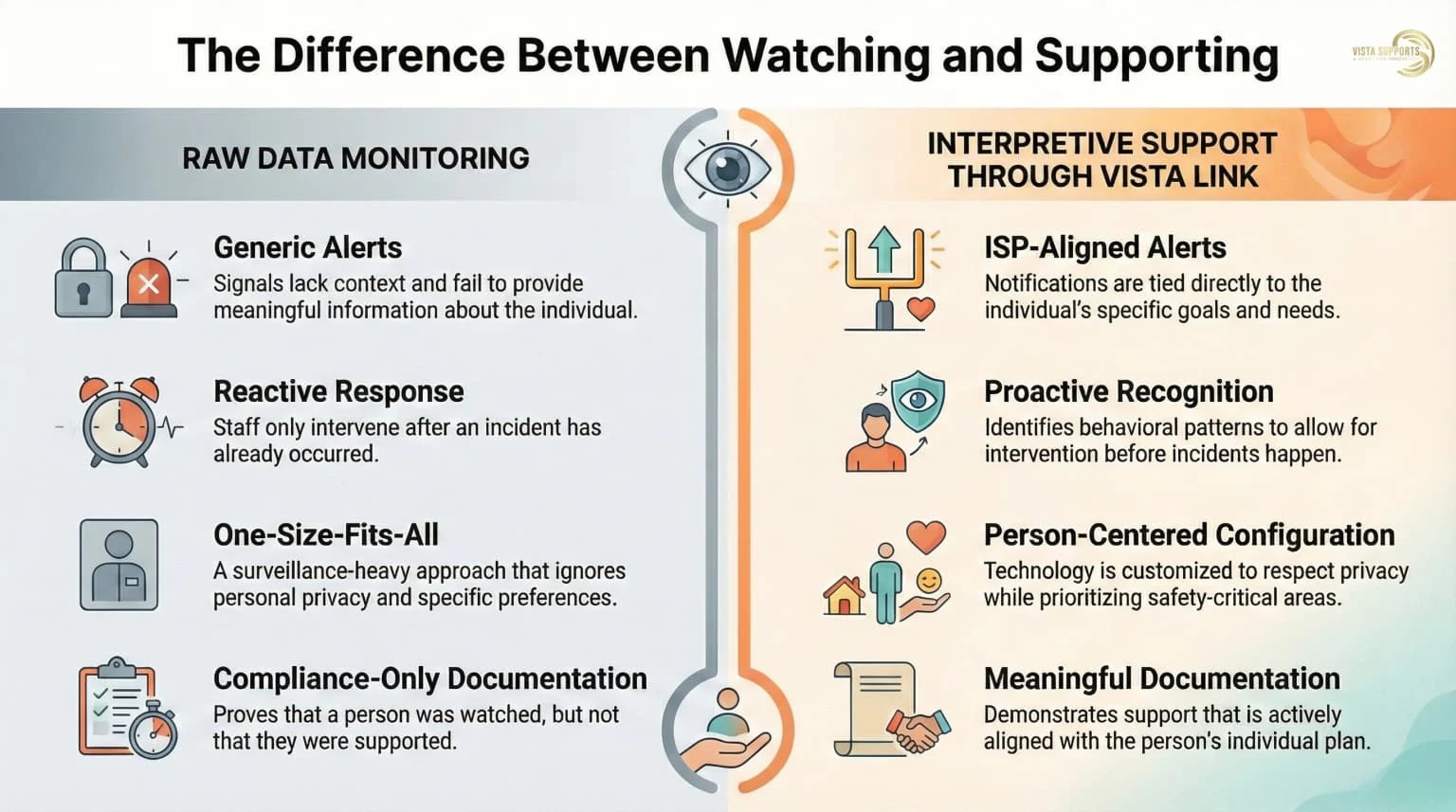
A remote DSP looking at raw sensor data sees: motion detected, door opened, temperature changed.
A remote DSP using Vista Link sees: Sarah is preparing breakfast independently, which aligns with her ISP goal around meal preparation. No support needed unless she initiates contact.
Or: Michael’s routine has changed. He usually watches TV until 10 PM but it’s 8 PM and sensors show he’s in bed. This deviation from pattern may indicate he isn’t feeling well. Check in via two-way audio.
The difference? Context. Understanding what the data means for THIS person, not just what happened.
It Grows With the Person and Their Circle of Support
Life doesn’t stand still. People achieve goals. New goals emerge. Health conditions change. Family members move closer or farther away. Providers transition.
Vista Link follows the person, not the provider. It is designed to evolve as the person’s needs and circumstances change, adding technology when independence increases, adjusting alerts when routines shift, incorporating new circle of support members when family dynamics change.
This is person-centered planning the way it is supposed to work. Except now it can scale across multiple people, multiple locations, multiple providers, without losing the individualization that makes it person-centered in the first place.
It Generates the Documentation That Justifies Your Billing
When a surveyor asks how you are documenting person-centered support through remote monitoring, you can show how the technology configuration aligns with the person’s specific ISP goals, what support the remote DSP provided and when, how outcomes demonstrate the person is achieving their goals, and where adjustments were made based on what the data revealed about the person’s needs.
That’s not surveillance documentation. That’s person-centered support documentation.
State-by-State Remote Supports IDD Implementation: What Is Actually Happening
Understanding how different states approach remote supports IDD helps agencies navigate their own implementation journeys. The regulatory landscape varies significantly, and what works in one state may not transfer directly to another.
Ohio’s Leadership in Remote Supports Policy
Ohio has emerged as a national leader in creating clear regulatory frameworks for remote supports. The Ohio Department of Developmental Disabilities has established guidelines for Remote Support Services, including requirements for monitoring center qualifications, response time standards, and individual consent protocols.
What makes Ohio’s approach notable is the distinction between “active” remote supports (real-time monitoring with immediate response capability) and “passive” supports (sensor-based systems that alert to specific conditions). This distinction matters because it acknowledges that not all remote monitoring requires the same intensity of staff presence.
Ohio’s regulatory clarity has driven adoption across many provider agencies, with documented improvements in emergency response times, reduced behavioral incidents, and improved quality of life indicators for individuals receiving services.
Tennessee’s Technology-First Integration
Tennessee’s approach emphasizes integration with the state’s Employment and Community First initiative. Rather than treating technology as a standalone service category, Tennessee incorporates remote supports considerations into person-centered planning processes from the initial assessment forward.
This integration matters because it positions technology as one tool among many in supporting people, not as a replacement category that competes with traditional services. Technology assessments occur alongside traditional support needs evaluations, ensuring that individuals and their teams consider enabling technology options thoughtfully.
Maryland’s Growing Remote Supports Landscape
Maryland has moved beyond the conceptual stage. The state’s Developmental Disabilities Administration has approved remote support services, and early providers are establishing direct service operations. The regulatory framework continues to develop, but the market is no longer theoretical. It is active, and the window for establishing presence is narrowing.
For agencies operating in Maryland and similar markets where remote supports are gaining traction, the greater opportunity lies beyond direct service delivery alone. When we partner with Maryland providers, we are strengthening them to build their own innovative solutions and elevate their standard of care. That is the work Vista was designed for, and it is where the most lasting impact happens.
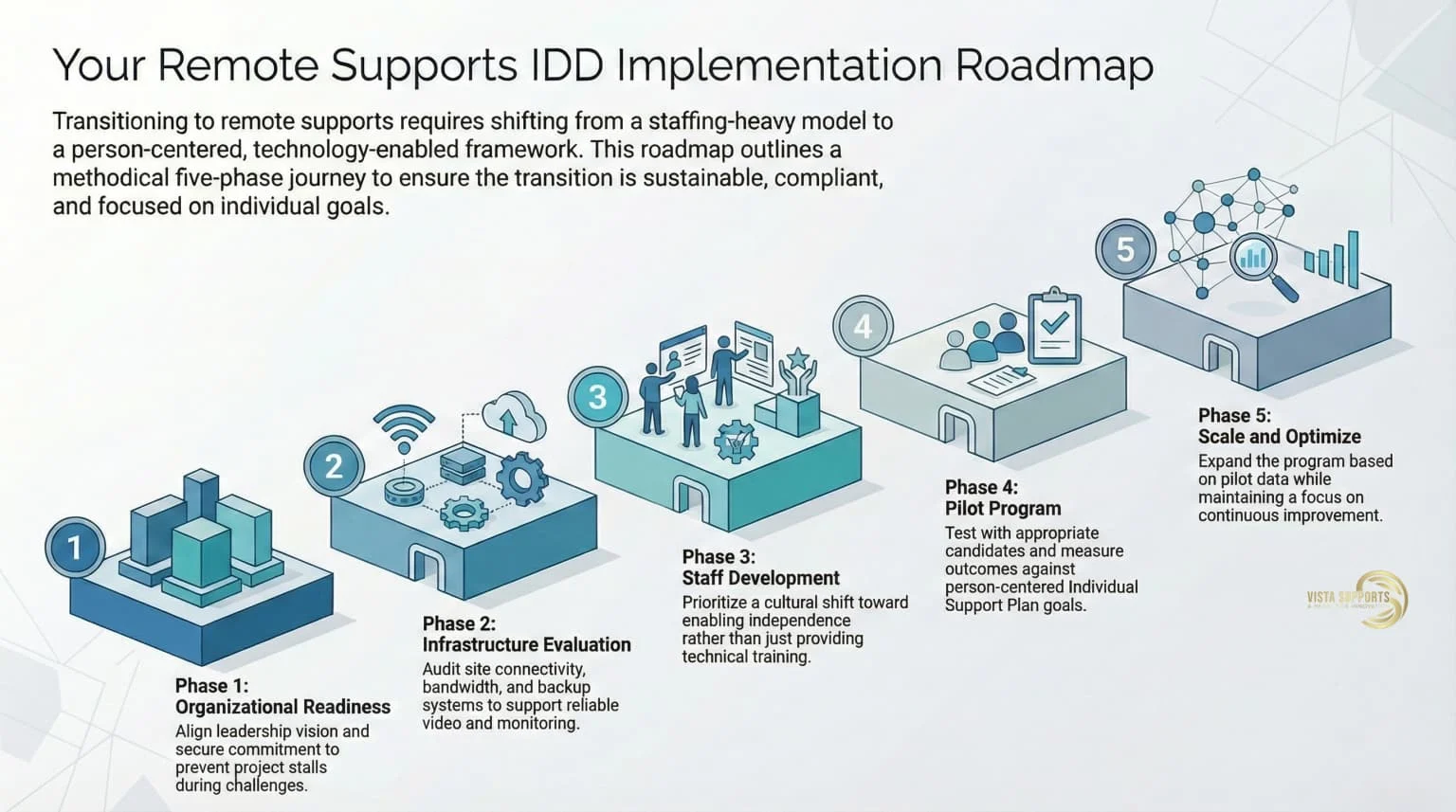
Building Your Remote Supports IDD Implementation Roadmap
Successful remote supports IDD implementation requires methodical planning. Agencies that rush toward technology deployment without adequate preparation struggle with staff resistance, regulatory scrutiny, and disappointing outcomes.
Start With Organizational Readiness
Does your agency’s leadership team genuinely understand and support remote supports IDD, or are they simply responding to financial pressures? Sustainable implementation requires executive champions who can articulate the vision, allocate resources, and maintain commitment through inevitable implementation challenges. Without this leadership foundation, remote supports IDD projects frequently stall or fail.
Evaluate Your Technology Infrastructure
Remote supports IDD requires reliable internet connectivity at all monitored locations, adequate bandwidth for video transmission, and backup systems for when primary connections fail. Many agencies discover that their existing technology infrastructure cannot support remote monitoring demands, necessitating facility upgrades before implementation can proceed.
Develop Your Staff Before Your Technology
Direct support professionals accustomed to in-person care delivery need training not only in technology operation but in the philosophical shift toward enabling independence rather than providing direct assistance. Remote monitoring staff require specialized skills in interpreting sensor data, making response decisions, and communicating effectively through technology interfaces.
This isn’t a weekend training. This is a culture shift. And culture shifts require sustained investment, ongoing coaching, and leadership that models the change they want to see.
Measuring Remote Supports IDD Success: Beyond the Bottom Line
Defining and measuring success in remote supports IDD requires looking beyond simple cost calculations. While financial sustainability matters enormously, the most compelling implementations demonstrate improvements across multiple dimensions.
Individual outcome metrics should remain primary. Are people supported through remote supports IDD achieving their ISP goals at rates comparable to or better than those receiving traditional staffed services? Are they experiencing fewer behavioral incidents, medical emergencies, and hospitalizations? Are satisfaction surveys indicating that individuals and their families feel safe, supported, and respected?
Staff metrics matter as well. Remote supports IDD implementation should correlate with improved retention rates, reduced overtime costs, and higher job satisfaction scores. If technology implementation creates staff resentment or increases turnover, long-term sustainability becomes questionable regardless of short-term financial gains.
Regulatory metrics provide external validation. Survey findings, licensing reports, and quality assurance reviews should demonstrate that remote supports IDD maintains or improves compliance with state and federal requirements.
The Future of Remote Supports IDD
Remote supports IDD technology continues evolving rapidly. Emerging capabilities in artificial intelligence and machine learning promise systems that can predict potential problems before they occur, adjusting support intensity in real-time based on behavioral patterns and environmental conditions. Integration with health monitoring devices may enable remote supports IDD to incorporate vital sign tracking, medication management, and chronic disease monitoring into comprehensive support packages.
Perhaps most importantly, generational shifts among individuals receiving services and their families create new expectations for technology integration. Younger adults with intellectual and developmental disabilities have grown up with smartphones, smart speakers, and connected devices as natural parts of daily life. Remote supports that leverage familiar technologies may feel more comfortable and empowering than traditional staffing models that some individuals experience as intrusive.
The policy environment continues shifting toward technology-enabled care. Federal initiatives emphasizing home and community-based services, state budget pressures driving efficiency demands, and workforce shortages showing no signs of abating all point toward expanded roles for remote supports in coming years.
Agencies that develop expertise now will be positioned as leaders when these trends fully mature.
Taking the Next Step With Remote Supports IDD
Implementing remote supports IDD represents significant organizational transformation. The technology itself is only one component. Success requires strategic planning, staff development, regulatory navigation, and ongoing quality improvement.
But most importantly, success requires understanding that person-centered planning is still the foundation. Technology doesn’t replace that foundation. Technology built on the right foundation enables person-centered planning to scale in ways that were never before possible.
Providers support people. Vista supports providers.
Vista Supports specializes in helping IDD provider agencies implement enabling technology solutions that satisfy regulators, engage staff, and improve outcomes for individuals served. Our Vista Link platform provides the interpretive framework that makes remote supports actually work, the synapse between technology signals and meaningful support decisions.
For agencies seeking comprehensive transformation support, our Vista Enterprise partnership model provides the strategic guidance, technical expertise, and implementation support necessary for sustainable success.
We love working alongside you, challenging each other to innovate further.
Ready to explore how remote supports IDD can transform your agency? Contact Vista Supports today for a personalized consultation.