
The best fall detection device for an older adult is the one that is working at the moment of the fall. Smartwatches and medical alert pendants help when they are worn and charged. Wall-mounted radar sensors work in the rooms where they are installed. Many families get the fullest coverage by combining them, with a trained person ready to respond.
Key takeaways
- Choose for the way the person lives: what they will wear, where they spend their time, and who should respond.
- Smartwatches and pendants travel with the person and work while they are on the body and charged. No fall detection catches every fall, and the major systems say so in their own disclaimers.
- Wall-mounted radar sensors read movement in the room, and some models also read breathing and heart rate, so they keep working while the watch sits on the nightstand.
- Layers give the fullest picture: a sensor in the rooms that matter most, a wearable for life outside the home, and a person who responds.
- Original Medicare does not cover medical alert systems, and some Medicare Advantage plans do. Vista Essence™ is private pay and designed around one person and one home.
Want help choosing the right mix for someone you love?
Schedule Your Complimentary Virtual Home AssessmentFall detection devices for seniors, side by side
Four kinds of technology can detect a fall at home. Each one works in a different place and asks something different of the person.
| Device | What the person does | Where it works | What it senses | Who responds | Privacy | Typical cost |
|---|---|---|---|---|---|---|
| Smartwatch | Wears it and charges it | Anywhere, with a cellular plan or Wi-Fi calling | Hard falls, plus heart rate and activity | Emergency services and saved contacts, after about a minute with no response | Worn on the body, with data in the person's own phone | The watch, plus a cellular plan to call from anywhere |
| Medical alert pendant or wristband | Wears it, charges it, and can press a button for help | At home, or anywhere with a mobile model that has GPS | Falls, through motion sensors in the device | The company's response center | Two-way voice with the response center | About $20 to $50 or more a month, with fall detection often about $10 more |
| Wall-mounted radar sensor | Lives as usual. The sensor mounts on a wall | The rooms where sensors are installed | Presence and movement in the room. Depending on the model, falls, breathing and heart rate | The service behind it. With Vista Essence™, Vista's trained team | Senses motion and vital signs instead of capturing images | Part of a designed system, such as Vista Essence™ |
| Camera with fall detection | Lives as usual. The camera mounts in the room | What the camera can see | Falls in view of the camera | The service behind it | Images or video, in the rooms the person chooses | Varies by system |
Sources: Apple Support, National Council on Aging, and the FDA 510(k) summary for the Xandar Kardian XK300.
Smartwatches
A smartwatch with fall detection, such as Apple Watch, can sense a hard fall, tap the wrist, sound an alarm, and call emergency services if the wearer does not respond for about a minute. Apple turns the feature on automatically for people 55 and older who enter their age. It fits people who already love wearing a watch and keep it charged.
Medical alert pendants and wristbands
Pendants and wristbands put a help button on the body, and most offer automatic fall detection as an add-on. The National Council on Aging reports that wrist-worn devices raise more false alarms than devices worn at the neck or on a belt. They are a strong choice for someone who will wear one every day, at home and out in the world.
Wall-mounted radar sensors
Radar sensors mount on a wall and sense the small movements of the body, so they work in the room whether or not the person has anything on. Different radar sensors do different jobs. For fall detection, Vista uses a radar sensor made for falls. For heart rate and breathing, Vista uses the Xandar Kardian XK300, which is cleared by the FDA to measure heart rate and breathing rate, with home healthcare among its uses. Vista Supports is the authorized distributor, reseller, installer and trainer for Xandar Kardian technology in disability and aging care.
Cameras with fall detection
Some home cameras use AI to recognize a fall and send an alert. They suit families who want to see as well as know, in the rooms the person chooses, and the person can change those choices at any time.
Why layers work better than one device
A fall can happen in the bathroom at night, in the kitchen at noon, or on the walk to the mailbox. One device rarely covers all of that. A layered design does:
- A sensor in the rooms that matter most, usually the bedroom and bathroom, so the hours without a watch are covered.
- A wearable for life outside the home, if the person wants one.
- Home sensors for the rest of the house: doors, motion, temperature and air quality.
- A person who responds, following a plan the family wrote together.
Vista designs this layer by layer, around one person and one home.
Schedule Your Complimentary Virtual Home AssessmentWhy I built Vista Essence™
I'm Gen X. I'm working, teaching, speaking and building companies. My mother doesn't want to live with me, and most older adults don't want to live with their adult children. They want to stay in the home they made comfortable, on their own terms. I respect that.
I also want to know she's okay in her own house. If she falls, I want to know. And I want someone ready to respond when I'm in the middle of teaching a class and can't pick up the phone.
When I talk with older adults themselves, I hear the same question from the other side of the door: if something happens while I'm living my best life in my own home, who would know?
People want to be supported. Some call it monitoring, and that word belongs in hospitals and acute care. I don't want to monitor my mom. I want to support her, and see her live her best life.
That is what Vista Essence™ is for.
What we've learned building homes for independence since 2006
In 2006, a man I supported told me what he wanted: his independence, and me out of his house. I gave him both. Out of my own pocket, I built him the first smart home and remote support solution for people with intellectual and developmental disabilities in the DMV. The technology was there so staff could step back and he could run his own life.
Later, Carl Hernandez and I converted a home of four older women with high medical needs into a smart home. For the first time in their lives, those women had full control of their own home, their privacy and their dignity. Vista's founding team was among the first in the country to put Xandar Kardian radar technology to work in disability services, and that work is featured in The Human Component, a BBC StoryWorks film.
Here is what those homes taught us. It shapes every Vista Essence™ design.
- Start with what the person wants to keep doing on their own. The device comes second.
- Learn how they actually live. I have stayed overnight in homes to see the real routine: where people walk at night, where they rest, and what they do on their own.
- Keep what is already working. Technology adds to a life and leaves what works in place.
- Put the person in charge. The four women I mentioned spent over a year learning they could control their home instead of asking permission. That shift is the whole point.
How Vista Essence™ designs fall support
Vista Essence™ is enabling and expanding technology designed around one person and one home, with Vista's trained team behind it.
- Complimentary virtual home assessment. A credentialed Vista team member meets with you virtually to learn the home, the routines and the vision for independence.
- Custom design. Vista designs the mix: radar sensors, home sensors, wearables, cameras or smart home tools, chosen for this person and this home.
- Professional installation. Vista's team installs, configures and tests everything, and walks the family through how it works.
- Ongoing remote support. Vista's trained professionals review alerts, respond and coordinate support when needed, and your family stays in the loop the way you choose.
Vista provides enabling technology and remote support. When someone needs hands-on help, Vista reaches the people in your plan and connects you with trusted partner home health agencies. Medical care and emergency services stay with medical and emergency professionals.
One-time setup
Starting at $1,800
Assessment, installation, configuration and training. Advanced builds and full home retrofits are scoped individually.
Monthly subscription
Starting at $249/mo
Platform access, AI-assisted insights, Vista Kardian Care™ support and ongoing technical support.
Vista Essence™ serves homes in Washington, DC, Maryland and Virginia. Families outside the region can still schedule the virtual assessment.
CAPS, ATP, and RN Certified. Our Co-Founder and Registered Nurse, Steven Simms, MSN, RN, CAPS, works alongside our team to ensure the technology we recommend is clinically sound and matched appropriately to the health conditions and needs of each client. Vista Supports is a participant in the AARP AgeTech Collaborative and an active member of the Consumer Technology Association (CTA).
Your family's design and price come together in one conversation.
Schedule Your Complimentary Virtual Home AssessmentQuestions families ask
What is the best fall detection device for elderly people?
The best device is the one working at the moment of a fall, and that depends on how the person lives. A smartwatch suits someone who wears one every day, while a wall-mounted radar sensor in the bedroom and bathroom covers the hours when jewelry and watches come off. Many families combine both, with a trained person ready to respond.
Can an Apple Watch detect a fall?
Yes. Apple Watch can detect a hard fall and call emergency services if the wearer does not respond for about a minute, and Apple turns fall detection on automatically for people 55 and older who enter their age. It works while the watch is on the wrist with Wrist Detection turned on.
How accurate are fall detection devices?
No fall detection catches every fall, and the major medical alert systems say so in their own disclaimers. The National Council on Aging notes that most accuracy testing uses staged falls in a lab, and that wrist-worn devices raise more false alarms than devices worn at the neck or belt. Pairing a wearable with a room sensor gives a second way to know.
Is there fall detection that works if my mom won't wear anything?
Yes. Wall-mounted radar sensors sense presence and movement in the rooms where they are installed, and some models also read breathing and heart rate, so she can live as usual. Vista Essence™ can be built around them, with a wearable added later if she ever wants one.
Does Medicare cover fall detection devices for seniors?
Original Medicare does not cover medical alert systems or fall detection devices. Some Medicare Advantage plans include them as a supplemental benefit, so check the plan's list of benefits. Vista Essence™ is private pay, so the design follows your family's choices.
How can I keep an eye on my mom while she lives alone?
Start with what she wants. Ask what she wants to keep doing on her own and what worries her. Then build support around that: sensors in the rooms she agrees to, and a trained person ready to respond the way her plan says. You know she is okay. She keeps living her life.
Is Vista Essence™ a senior monitoring system?
Vista Essence™ is support, designed around how you want to live. Some call it monitoring, and we leave that word to hospitals and acute care. In your own home, you deserve to be supported: technology chosen for your life, and Vista's trained team ready to respond when something needs attention.
What does Vista Essence™ cost?
Setup starts at $1,800 and the monthly subscription starts at $249, and both scale with the design. The complimentary virtual home assessment is where your family's design and price come together.
Start with a conversation
Tell us how your parent, your partner or you want to live. We will design the support around it.
Schedule Your Complimentary Virtual Home Assessment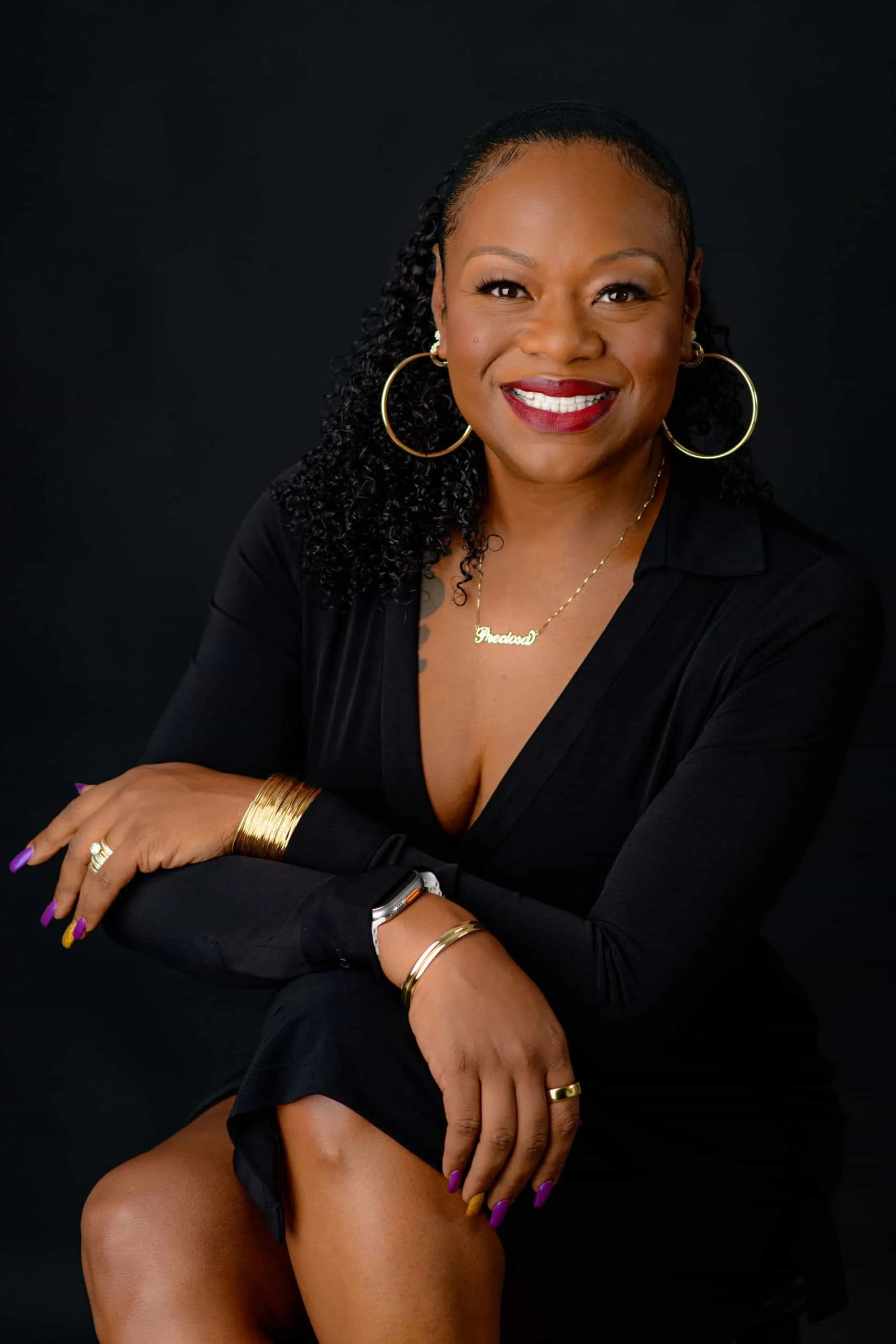
Precious “Preciosa” Myers-Brown is The Voice of Enabling Technology™. She started as a direct support professional over three decades ago, built the first smart home and remote support solution for people with intellectual and developmental disabilities in the DMV in 2006, and is the author of Tech Equity: Freedom Through Enabling Technology.