I have been a nurse for thirty years. Most of those years were spent in cardiology, watching monitors, reading rhythms, and making decisions in the space between one heartbeat and the next. When I transitioned into disability services, I expected the clinical complexity to decrease. I was wrong. What I found was a population aging into the same chronic conditions I had spent my career managing, only without the monitoring infrastructure that hospitals and skilled nursing facilities take for granted.
Remote health monitoring for people with intellectual and developmental disabilities is not a futuristic concept. It is an urgent clinical need that most provider agencies have not yet recognized, and that senior care organizations are only beginning to understand. The IDD population is living longer than at any point in history. Adults with Down syndrome who once had a life expectancy in their thirties are now surviving into their sixties and seventies. Individuals with cerebral palsy, autism, and other developmental disabilities are aging into hypertension, diabetes, cardiovascular disease, and dementia at rates that compound their existing support needs in ways the traditional service model was never designed to address.
This convergence of aging and disability creates a clinical gap that enabling technology can close, if the implementation is guided by clinical thinking rather than technology enthusiasm alone.
The Health Crisis Hiding in Plain Sight
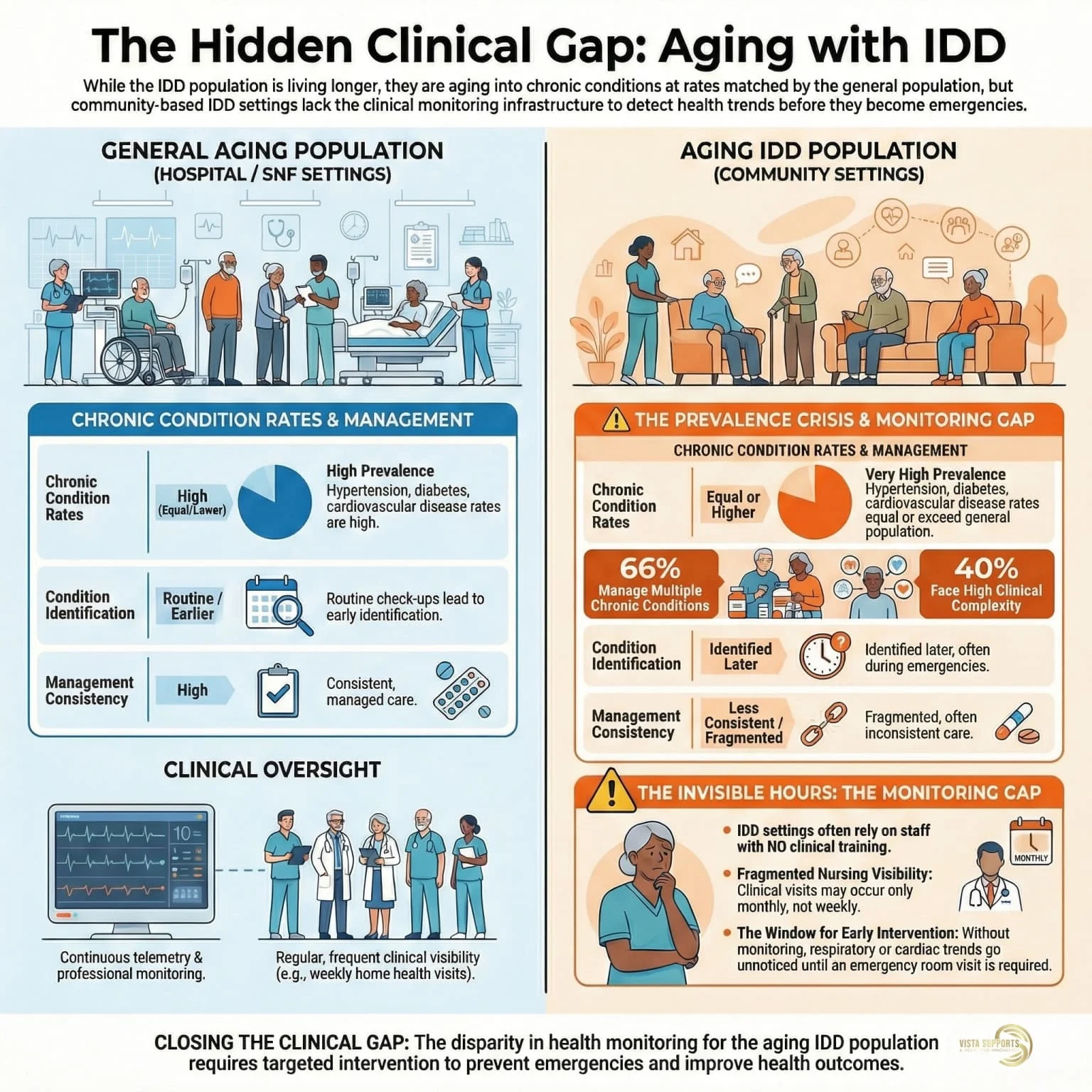
The numbers tell a story that should concern every provider agency and every senior care organization in the country. Research consistently shows that adults with intellectual and developmental disabilities experience chronic health conditions at rates that equal or exceed the general population, yet receive less preventive care, fewer routine health screenings, and more fragmented clinical oversight. Research published in the Journal of Policy and Practice in Intellectual Disabilities examining nearly a thousand adults with IDD found that two-thirds had two or more chronic health conditions, with more than forty percent managing four or more simultaneously. Separate findings from the American Association on Intellectual and Developmental Disabilities confirm that hypertension, diabetes, cardiovascular disease, and respiratory conditions appear at rates comparable to or exceeding those in the general aging population, yet are identified later and managed less consistently.
These are not abstract statistics. They represent real people living in group homes, supported apartments, and family residences where overnight staff may have no clinical training whatsoever. A direct support professional who excels at community integration and behavioral support may have no idea that the person they support is showing early signs of congestive heart failure. A family caregiver managing their aging parent’s needs may not recognize that subtle changes in breathing patterns during sleep signal a deteriorating respiratory condition.
The parallel reality in senior care tells a similar story with different origins. Assisted living facilities operate with staffing ratios that make continuous clinical monitoring impossible. Nursing homes face the same workforce shortages devastating IDD services. Home health agencies send nurses for periodic visits but have no visibility into what happens between appointments. In every setting, the clinical gap is the same: what happens when nobody is watching is where the danger lives.
What Gets Missed Between Rounds
Every nurse knows that the most dangerous hours in any care setting are the ones with the least clinical observation. In hospitals, monitoring equipment fills that gap. Cardiac telemetry, pulse oximetry, and automated vital sign systems ensure that changes in patient condition trigger immediate attention. In community-based settings where people with IDD live, and in the assisted living and home care environments where seniors age in place, that monitoring infrastructure simply does not exist.
Consider what happens overnight in a typical group home. One or two staff members cover the shift, often responsible for multiple individuals across shared living spaces. Their training focuses on emergency response and behavioral protocols, not clinical assessment. If someone’s respiratory rate gradually increases over several hours, signaling a brewing infection or fluid overload, nobody notices until morning when the person appears visibly ill. By then, the window for early intervention has closed and an emergency room visit becomes the default response.
The same pattern plays out in assisted living. A resident whose sleep patterns have shifted dramatically over two weeks, a classic early indicator of urinary tract infection, cognitive decline, or medication side effects, receives no attention until the change manifests as a behavioral crisis or a fall. The facility responds to the acute event rather than the underlying trend because it had no mechanism to detect the trend in the first place.
Home health presents perhaps the starkest version of this gap. A nurse visits a homebound senior twice a week, takes vital signs, assesses medication compliance, and documents observations. But between those visits, days pass with zero clinical visibility. For individuals with IDD receiving home-based services, the gap may be even wider, with clinical nursing visits occurring monthly or quarterly rather than weekly.
Remote health monitoring closes this gap not by replacing clinical judgment but by extending clinical reach into the hours and spaces where it has never existed before.
Remote Health Monitoring as Clinical Infrastructure
The distinction between consumer wellness technology and clinical-grade remote health monitoring matters enormously for the populations we are discussing. A fitness tracker that counts steps and estimates heart rate serves a fundamentally different purpose than a medical-grade sensor system capable of detecting respiratory rate changes, cardiac rhythm irregularities, and sleep pattern disruptions with the precision necessary to inform clinical decision-making.
For aging adults with IDD and for senior populations broadly, the technology must meet clinical standards while accommodating the realities of the people it serves. This is where many well-intentioned technology deployments fail. Wearable devices assume that the person will consistently wear them, charge them, and avoid damaging them. For individuals with sensory sensitivities common in autism, tactile defensiveness associated with certain developmental disabilities, or the confusion and agitation that accompany dementia, wearables become an immediate implementation barrier.
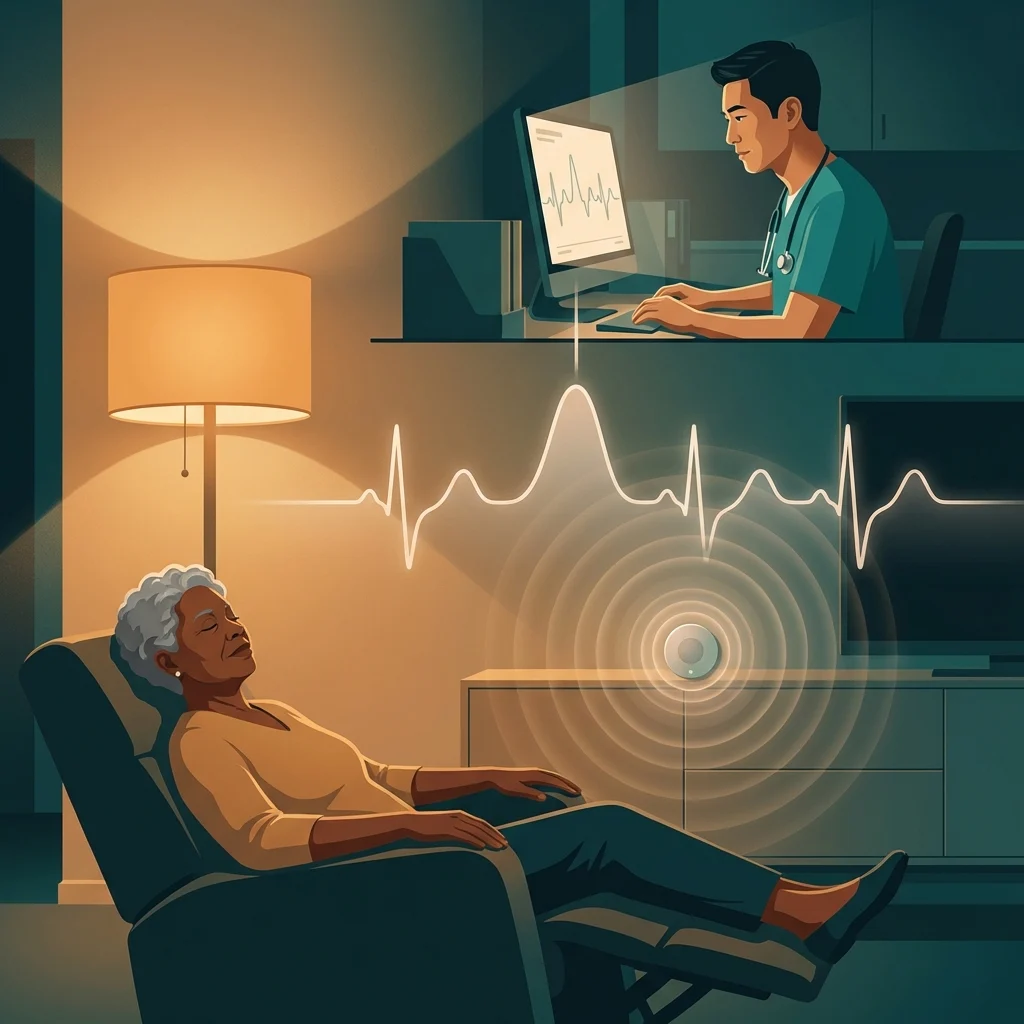
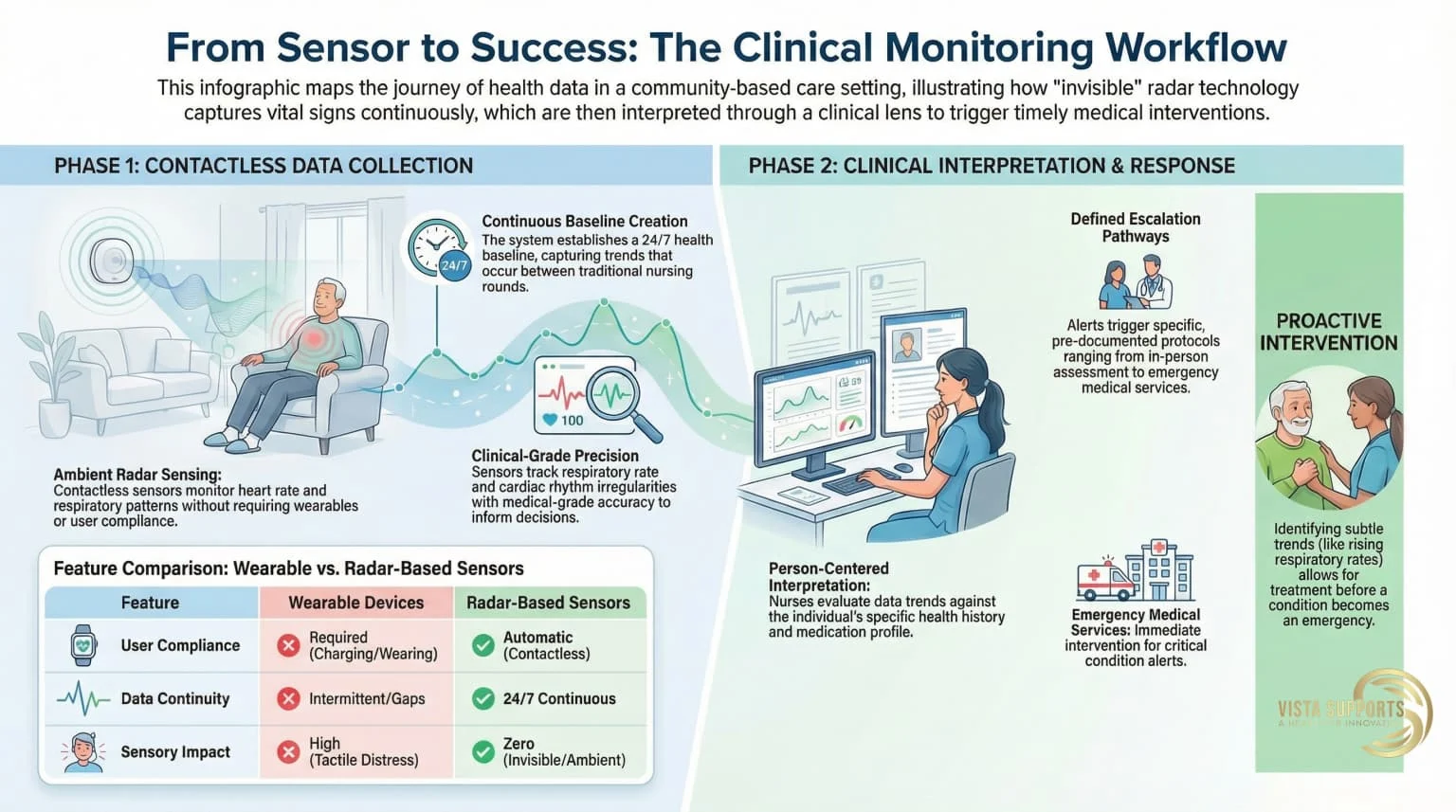
Radar-based vital signs monitoring addresses this fundamental challenge. Contactless sensors mounted in living spaces can detect respiratory rate, heart rate, movement patterns, and sleep quality without requiring anything from the person being monitored. No wristband to remember. No device to charge. No physical contact that triggers sensory distress. The technology operates invisibly, which for populations that have historically experienced monitoring as surveillance and control rather than care, represents a meaningful shift in how technology enters their lives.
The question providers most frequently ask is why radar rather than wearables. The clinical answer is straightforward: compliance. A wearable device only generates data when the person wears it. For aging adults with dementia who remove unfamiliar objects from their bodies, for individuals with autism whose sensory profiles make wristbands intolerable, and for anyone who simply forgets to charge a device, wearable-dependent monitoring creates gaps precisely when continuous data matters most. Radar-based systems eliminate compliance as a variable entirely. The sensor monitors the space, not the person, which means clinical data flows continuously regardless of the individual’s cognitive status, sensory preferences, or daily routines. For clinical decision-making, that consistency is not a convenience. It is a requirement.
From a clinical perspective, the data these systems generate creates something that has never existed in community-based care: a continuous health baseline. When I can see that someone’s resting respiratory rate has trended upward from fourteen to eighteen breaths per minute over five days, I have actionable clinical intelligence. That trend might indicate a developing pneumonia, fluid retention from worsening heart failure, or an anxiety response to an environmental change. Each possibility demands a different clinical response, but all of them demand attention before the person ends up in an emergency room.
One Technology Stack, Two Populations
Here is something that neither the IDD service sector nor the senior care industry has fully recognized: the enabling technology infrastructure required to monitor aging adults with intellectual and developmental disabilities is functionally identical to the infrastructure needed for seniors aging in place, residents in assisted living, and patients in home health programs.
The sensors are the same. The data streams are the same. The clinical decision-making frameworks are the same. What differs is the service delivery context, the regulatory environment, and the population-specific clinical knowledge that must inform how technology data gets interpreted and acted upon.
This convergence creates an extraordinary opportunity for provider agencies. Organizations already serving individuals with IDD possess something that pure-play senior care technology vendors do not: deep experience in person-centered planning, individualized support delivery, and technology implementation within highly regulated environments. An IDD provider agency that has navigated Technology First initiatives, Individual Service Plan integration, and state waiver requirements already understands the operational complexity that senior care organizations are only beginning to encounter as they adopt enabling technology.
The reverse is also true. Senior care organizations, particularly home health agencies and assisted living operators, bring clinical infrastructure, nursing oversight models, and healthcare billing expertise that IDD provider agencies often lack. The convergence point, where these two sets of capabilities meet, is precisely where enabling technology creates the most value.
For agencies considering expansion across these populations, the business case is straightforward. The same sensor installation, the same monitoring platform, and the same clinical response protocols serve both populations. The marginal cost of adding a senior aging in place to a monitoring system already supporting individuals with IDD is a fraction of building parallel infrastructure from scratch, and a fraction of what a single overnight nursing position costs annually in wages, benefits, and overtime. When a single preventable emergency room visit can cost more than an entire year of remote health monitoring for that individual, the financial logic stops being theoretical. Revenue diversification follows naturally, with Medicaid waiver funding supporting IDD services while Medicare Advantage supplemental benefits, private pay, and long-term care insurance create distinct funding streams for aging care.
What Clinical Confidence Actually Requires
Technology vendors sell hardware. They sell platforms and dashboards and alert systems. What they rarely provide, because it sits outside their expertise, is the clinical framework that transforms technology data into meaningful care decisions. This gap explains why so many promising technology deployments end up underutilized or abandoned. The technology works, but the people receiving alerts do not know what to do with the information.
Clinical confidence in remote health monitoring requires three elements that technology alone cannot deliver.
First, clinical interpretation protocols must define what the data means in context. A heart rate of 95 beats per minute during sleep might be clinically insignificant for one person and an urgent concern for another, depending on their baseline, medication profile, and health history. Generic alert thresholds that treat every monitored individual identically generate alarm fatigue and erode staff trust in the system. Person-specific clinical parameters, established by nursing professionals who understand the individual’s health profile, transform raw data into clinically relevant intelligence.
Second, response escalation pathways must be clearly defined and consistently executed. When monitoring detects a concerning vital sign trend, who receives the alert? What assessment steps should the first responder take? At what threshold does the situation escalate from remote observation to in-person clinical assessment to emergency medical services? These pathways must be documented, trained, and practiced. They cannot be improvised in the moment by overnight staff encountering an unfamiliar alert.
Third, clinical oversight must be ongoing, not episodic. Installing sensors and establishing initial parameters is not sufficient. As individuals age, their health profiles change. Medications get adjusted. New diagnoses alter baseline expectations. Nursing professionals must regularly review monitoring data, update clinical parameters, and ensure that the technology configuration continues to reflect the person’s current health reality. This is not a technology function. It is a nursing function enabled by technology.
Provider agencies and senior care organizations evaluating remote health monitoring should ask potential technology partners a simple question: who provides the clinical intelligence? If the answer points only to the algorithm, that should give pause. Algorithms detect patterns. Nurses understand patients.
The Regulatory Landscape Supports This Direction
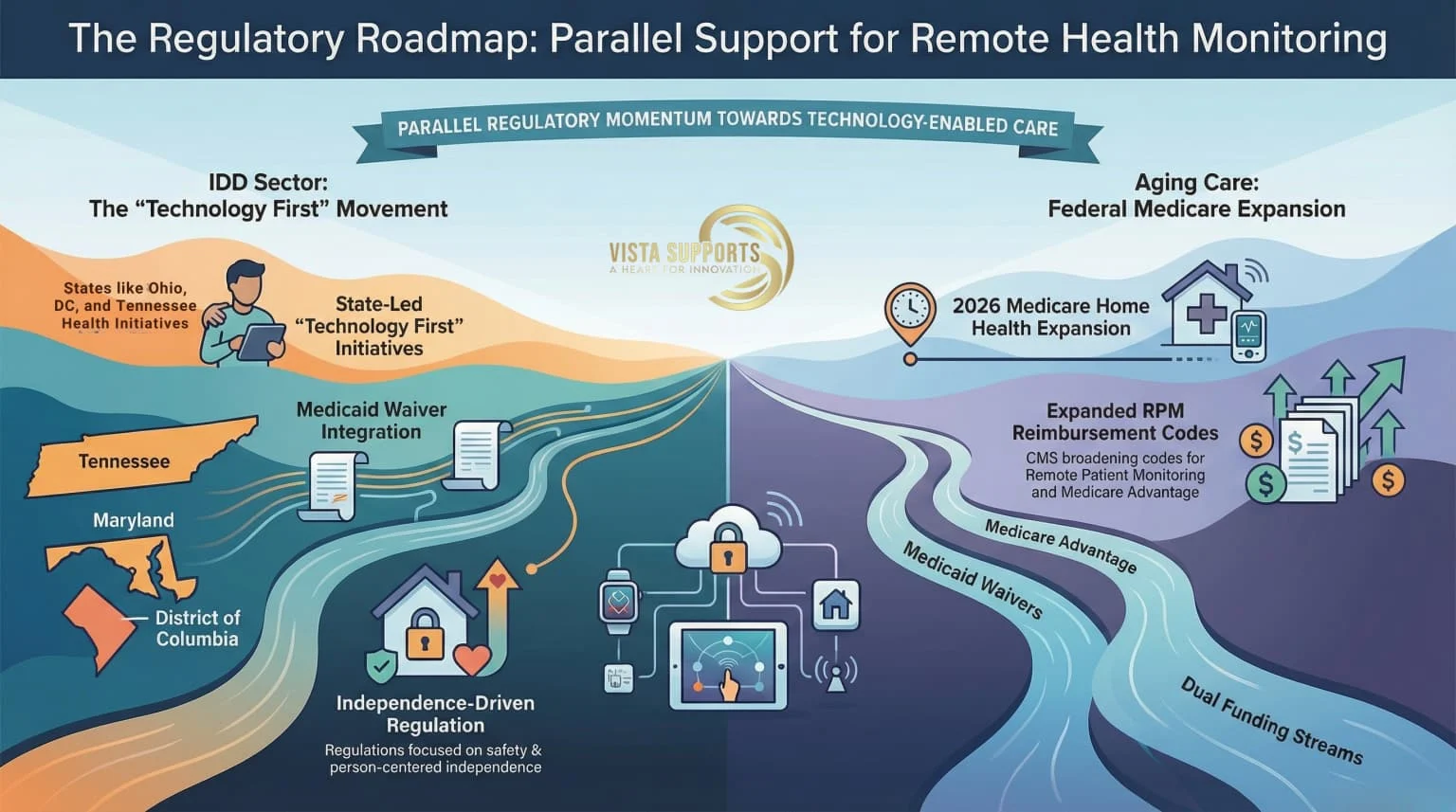
The policy environment increasingly favors technology-enabled health monitoring across both IDD and aging populations. Technology First initiatives in states like Ohio, Tennessee, Maryland, and the District of Columbia explicitly encourage enabling technology as an alternative to continuous staffed services for individuals with intellectual and developmental disabilities. These frameworks recognize that technology can maintain safety while promoting the independence that person-centered planning demands.
On the aging care side, Centers for Medicare and Medicaid Services continues expanding Remote Patient Monitoring reimbursement codes and Medicare Advantage supplemental benefit flexibility. The 2026 expansion of Medicare home health coverage, including explicit inclusion of remote patient monitoring devices, signals federal recognition that technology-enabled care is not supplemental but foundational.
For provider agencies navigating both populations, this dual regulatory momentum creates favorable conditions for investment. The same technology infrastructure can generate reimbursable services under IDD Medicaid waivers and Medicare Advantage simultaneously, with each funding stream supporting a portion of the total implementation cost.
State licensing requirements, Individual Service Plan documentation standards, and quality assurance frameworks all increasingly accommodate technology-enabled care models. Agencies that establish remote health monitoring capabilities now position themselves ahead of regulatory requirements that will likely become standard expectations within the next several years.
Moving from Concept to Implementation
Every clinical innovation I have witnessed in thirty years of nursing followed the same pattern. Early adoption by organizations willing to invest in something unproven. Demonstrated outcomes that shift the conversation from possibility to evidence. Rapid adoption once the evidence becomes undeniable. Remote health monitoring for aging adults with IDD and for senior populations sits precisely at the transition point between early adoption and demonstrated outcomes.
The agencies and organizations that implement now will define best practices, establish outcome benchmarks, and build the clinical expertise that becomes increasingly valuable as adoption accelerates. Those that wait will eventually implement the same technology but without the competitive advantage of early experience or the operational maturity that comes from learning through real-world deployment.
Implementation does not require rebuilding your organization. It requires a commitment to understanding what enabling technology can and cannot do, a willingness to invest in clinical infrastructure alongside hardware, and a partner who understands that technology without clinical intelligence is just equipment.
Providers support people. Vista supports providers. Vista Supports brings clinical expertise and enabling technology implementation together because both are necessary and neither is sufficient alone. Our approach ensures that remote health monitoring serves as genuine clinical infrastructure, not just a technology demonstration. Whether your agency serves individuals with IDD aging into new health complexities, seniors requiring continuous monitoring to remain safely at home, or both populations simultaneously, the clinical framework matters as much as the sensor on the wall. And when Vista’s work is done, the agency is stronger, not stranded.
If your agency is navigating the health complexity of an aging population, whether in IDD residential services, assisted living, home health, or senior living, the first step is not selecting a sensor. It is understanding what clinical infrastructure your current model is missing and what enabling technology can realistically provide. Schedule a clinical technology assessment with Vista Supports. We start with the nursing questions, not the product catalog.